Search
Suggested Searches
Highlights
 \
\
\
11 min read\
\
NASA Answers Your Most Pressing Artemis II Questions\
\
article2 days ago  \
\
\
11 min read\
\
NASA’s Artemis II Moon Mission Daily Agenda\
\
article3 weeks ago  \
\
\
3 min read\
\
Track NASA’s Artemis II Mission in Real Time\
\
article1 month ago
Back
- Search All NASA Missions
- A to Z List of Missions
- Upcoming Launches and Landings
- Spaceships and Rockets
- Communicating with Missions
- Artemis
- James Webb Space Telescope
- Hubble Space Telescope
- International Space Station
- OSIRIS-REx
- Explore Earth Science
- Climate Change
- Earth, Our Planet
- Earth Science in Action
- Earth Multimedia
- Earth Data
- Earth Science Researchers
- The Sun
- Mercury
- Venus
- Earth
- The Moon
- Mars
- Jupiter
- Saturn
- Uranus
- Neptune
- Pluto & Dwarf Planets
- Asteroids, Comets & Meteors
- The Kuiper Belt
- The Oort Cloud
- Skywatching
- Exoplanets
- The Search for Life in the Universe
- Stars
- Galaxies
- Black Holes
- The Big Bang
- Dark Matter
- Dark Energy
- Earth Science
- Planetary Science
- Astrophysics & Space Science
- The Sun & Heliophysics
- Biological & Physical Sciences
- Lunar Science
- Citizen Science
- Astromaterials
- Aeronautics Research
- Human Space Travel Research
- Science in the Air
- NASA Aircraft
- Flight Innovation
- Supersonic Flight
- Air Traffic Solutions
- Green Aviation Tech
- Drones & You
- Technology Transfer & Spinoffs
- Space Travel Technology
- Technology Living in Space
- Manufacturing and Materials
- Robotics
- Science Instruments
- Computing
- For Kids and Students
- For Educators
- For Colleges and Universities
- For Professionals
- Science for Everyone
- Requests for Exhibits, Artifacts, or Speakers
- STEM Engagement at NASA
- NASA’s Impacts
- Centers and Facilities
- Directorates
- Organizations
- People of NASA
- Careers
- Internships
- Our History
- Doing Business with NASA
- Get Involved
- Contact
- Recently Published
- Video Series on NASA+
- Podcasts & Audio
- Blogs
- Newsletters
- Social Media
- Media Resources
Highlights
\
\
11 min read\
\
NASA Answers Your Most Pressing Artemis II Questions\
\
article2 days ago \
\
11 min read\
\
NASA’s Artemis II Moon Mission Daily Agenda\
\
article3 weeks ago \
\
3 min read\
\
Track NASA’s Artemis II Mission in Real Time\
\
article1 month ago
Highlights
\
\
11 min read\
\
NASA Answers Your Most Pressing Artemis II Questions\
\
article2 days ago  \
\
\
1 min read\
\
Artemis II Podcast Series\
\
article1 week ago  \
\
\
7 min read\
\
NASA Releases Artemis II Moon Mission Launch Countdown\
\
article2 weeks ago
Highlights
 \
\
\
4 min read\
\
Barents Sea Tied to Low Arctic Sea Ice\
\
article4 days ago  \
\
\
3 min read\
\
Réunion Island Lava Reaches the Sea\
\
article5 days ago  \
\
\
3 min read\
\
March of the Harmattan\
\
article6 days ago
Highlights
 \
\
\
1 min read\
\
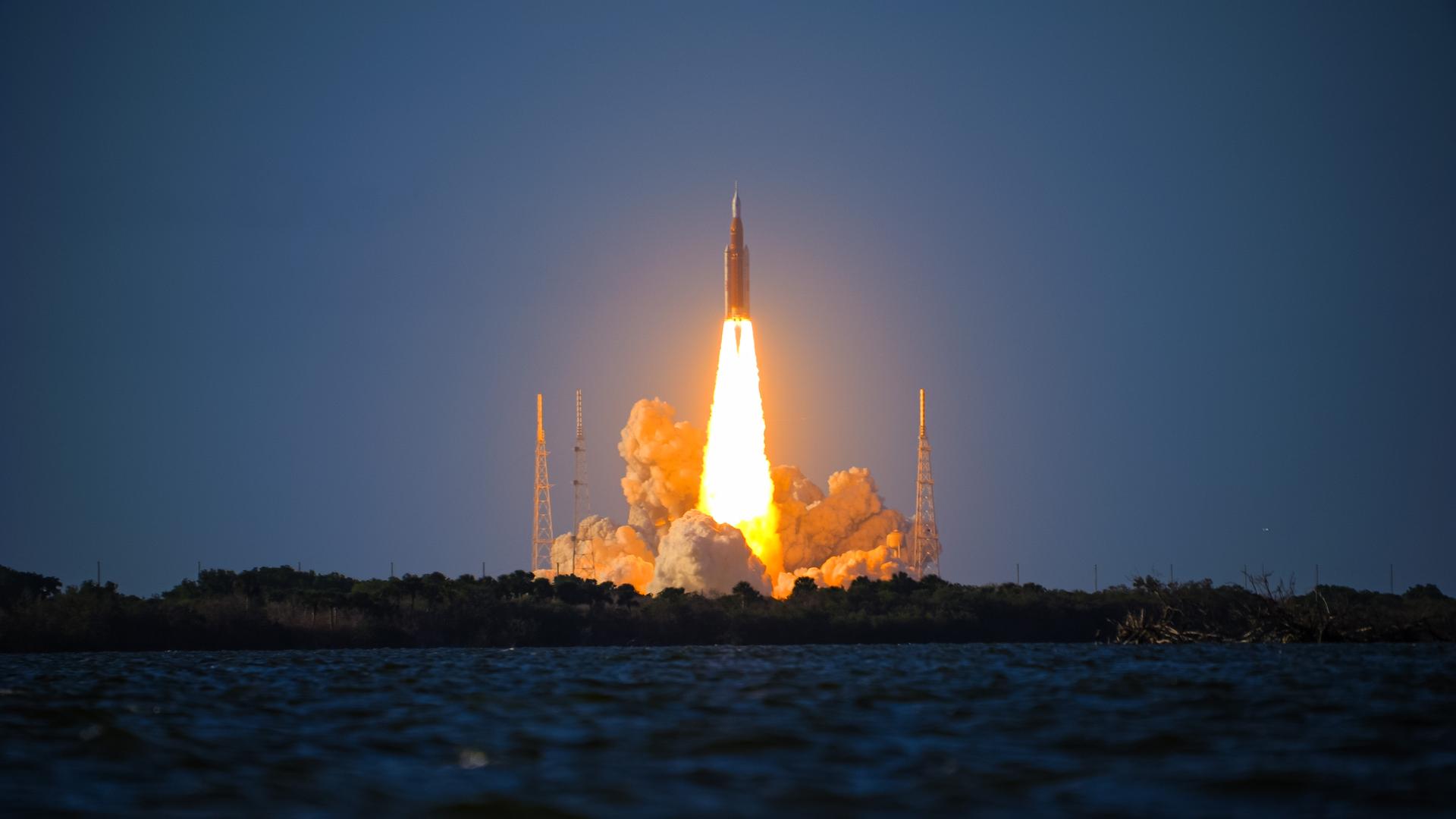
Night Sky Network Celebrates Artemis II\
\
article9 hours ago  \
\
\
5 min read\
\
Meet NASA’s New Artemis II Science Officers\
\
article3 days ago  \
\
\
1 min read\
\
Impact Flash!\
\
article5 days ago
Highlights
 \
\
\
6 min read\
\
NASA Webb, Hubble Share Most Comprehensive View of Saturn to Date\
\
article2 weeks ago  \
\
\
5 min read\
\
NASA-JAXA’s XRISM Telescope Clocks Hot Wind of Galaxy M82\
\
article2 weeks ago  \
\
\
4 min read\
\
NASA’s Hubble Revisits Crab Nebula to Track 25 Years of Expansion\
\
article2 weeks ago
Highlights
\
\
5 min read\
\
Meet NASA’s New Artemis II Science Officers\
\
article3 days ago \
\
4 min read\
\
Barents Sea Tied to Low Arctic Sea Ice\
\
article4 days ago  \
\
\
2 min read\
\
Georgia Peterson\
\
article5 days ago
Highlights
 \
\
\
4 min read\
\
NASA Selects Finalists in Student Aircraft Maintenance Competition\
\
article2 weeks ago  \
\
\
2 min read\
\
NASA’s X-59 Experimental Supersonic Aircraft Makes Second Flight\
\
article2 weeks ago  \
\
\
2 min read\
\
NASA Simulations Improve Artemis II Launch Environment\
\
article2 weeks ago
Highlights
 \
\
\
3 min read\
\
Fires Tear Through Nebraska Grasslands\
\
article7 days ago  \
\
\
3 min read\
\
I Am Artemis: Erik Richards\
\
article1 week ago  \
\
\
6 min read\
\
NASA Tech and Science Bound for Low Earth Orbit on Commercial Launch\
\
article1 week ago
Highlights
 \
\
\
1 min read\
\
Join the Artemis Mission to the Moon\
\
article5 months ago
Highlights
 \
\
\
4 min read\
\
Preparing for Artemis II: Training for a Mission Around the Moon\
\
article2 months ago \
\
5 min read\
\
Meet NASA’s New Artemis II Science Officers\
\
article3 days ago 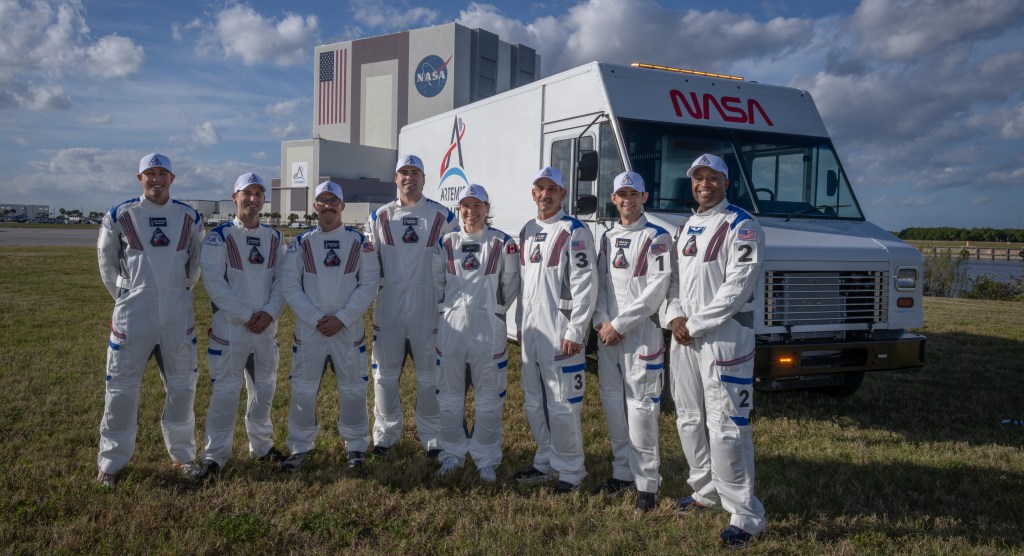 \
\
\
3 min read\
\
Get In, We’re Going Moonbound: Meet NASA’s Artemis Closeout Crew\
\
article3 months ago
Highlights
 \
\
\
11 min read\
\
La NASA anuncia la cobertura de la misión lunar Artemis II\
\
article2 weeks ago \
\
15 min read\
\
Agenda diaria de la misión a la Luna de Artemis II de la NASA\
\
article3 weeks ago  \
\
\
6 min read\
\
La NASA refuerza Artemis: añade una misión y perfecciona su arquitectura general\
\
article1 month ago
Explore This Section
UAP
Contents
- NASA Unidentified Anomalous Phenomena Independent Study
- Final Report
- Notice of Public Meeting: May 31, 2023
- Public Briefings and Presentations
- Principles
- Statement of Task
- Appointment of Members
- Terms of Reference

We commissioned a study team to examine from a scientific perspective unidentified anomalous phenomena (UAPs) – that is, observations of events in the sky that cannot be identified as aircraft or known natural phenomena. This is a group photo from their public meeting on May 31, 2023.
NASA Unidentified Anomalous Phenomena Independent Study
On June 9, 2022, NASA announced that the agency is commissioning a study team to examine unidentified anomalous phenomena (UAPs) – that is, observations of events in the sky that cannot be identified as aircraft or known natural phenomena – from a scientific perspective. The study will focus on identifying available data, how best to collect future data, and how NASA can use that data to move the scientific understanding of UAPs forward. This webpage is designed as a resource to provide updates on the UAP Independent Study.
NASA Unidentified Anomalous Phenomena Study - Frequently Asked Questions
Final Report

On September 14, 2023, the NASA Unidentified Anomalous Phenomena Independent Study Team published its final report containing a series of recommendations for how the agency could help to move our understanding of UAP forward.
Download the UAP Independent Study Team Final Report
Media Briefing: Unidentified Anomalous Phenomena Independent Study Report (YouTube)
Notice of Public Meeting: May 31, 2023
In accordance with the Federal Advisory Committee Act, NASA announces a Public Meeting of the Unidentified Anomalous Phenomena Independent Study Team (UAPIST). This meeting will take place on Wednesday, May 31, 10:30am-2:30pm ET. The meeting will be broadcast live at https://www.nasa.gov/live/, and public participation is available by submitting and upvoting questions at https://nasa.cnf.io/sessions/hh4r/ starting on Friday, May 12.
- Agenda
- Media advisory
- Federal Register Notice
- Telecon (YouTube)
- Meeting (YouTube)
Public Briefings and Presentations
NASA to Discuss New Unidentified Aerial Phenomena Study Today - YouTube
Tap to unmute
NASA to Discuss New Unidentified Aerial Phenomena Study Today NASA Video

NASA Video1.05M subscribers
On June 9, 2022, Dr. Thomas Zurbuchen presented an update on NASA’s Science Program to a joint meeting of the National Academies Space Studies Board and Aeronautics and Space Engineering Board, which included an outline of NASA’s UAP Independent Study.
Principles
NASA leads the world in exploration and is committed to rigorous scientific inquiry. Consistent with NASA’s principles of openness, transparency, and scientific integrity, NASA is establishing the UAP Independent Study as a means to secure the counsel of community experts across diverse areas on matters relevant to potential methods of study of unidentified anomalous phenomena. The UAP Independent Study serves as a community-based, interdisciplinary forum for soliciting and coordinating community analysis and input and providing advice.
Statement of Task
The UAP Independent Study shall report on the following questions:
- What types of scientific data currently collected and archived by NASA or other civilian government entities should be synthesized and analyzed to potentially shed light on the nature and origins of Unidentified Anomalous Phenomena (UAP)?
- What types of scientific data currently collected and held by non-profits and companies should be synthesized and analyzed to potentially shed light on the nature and origins of UAP?
- What other types of scientific data should be collected by NASA to enhance the potential for developing an understanding of the nature and origins of UAP?
- Which scientific analysis techniques currently in production could be employed to assess the nature and origins of UAP? Which types of analysis techniques should be developed?
- In considering the factors above, what basic physical constraints can be placed on the nature and origins of UAP?
- What civilian airspace data related to UAPs have been collected by government agencies and are available for analysis to a) inform efforts to better understand the nature and origins of UAPs, and b) determine the risk of UAPs to the National Air Space (NAS)?
- What current reporting protocols and air traffic management (ATM) data acquisition systems can be modified to acquire additional data on past and future UAPs?
- What potential enhancements to future ATM development efforts can be recommended to acquire data concerning future reported UAPs to assist in the effort to better understand the nature and origin of the UAPs?
Appointment of Members
NASA’s Science Mission Directorate, in consultation with NASA’s Aeronautics Research Mission Directorate, will appoint the Chair and members of the UAP Independent Study for terms of up to one year. Diversity of thought shall be a factor in determining the composition of the UAP Independent Study. The UAP Independent Study will have approximately eight to twelve members chosen with an appropriately broad range of expertise; experience; employer types and sizes; and individual demographics. The membership will consist of experts drawn from U.S. academic, independent, and commercial institutions. Members of the UAP Independent Study who are not Regular Government Employees (RGE) will be designated Special Government Employees (SGE) or Representatives. A NASA civil servant will be appointed as the Designated Federal Officer and Executive Secretary of the UAP Independent Study.
Terms of Reference
Full Copy of the Terms of Reference
Questions about UAP should be directed to Daniel A. Evans ( Daniel.A.Evans@nasa.gov).
Keep Exploring
Discover More Topics From NASA
James Webb Space Telescope \
\
Webb is the premier observatory of the next decade, serving thousands of astronomers worldwide. It studies every phase in the…\
\
 Perseverance Rover \
\
This rover and its aerial sidekick were assigned to study the geology of Mars and seek signs of ancient microbial…\
\
 Parker Solar Probe \
\
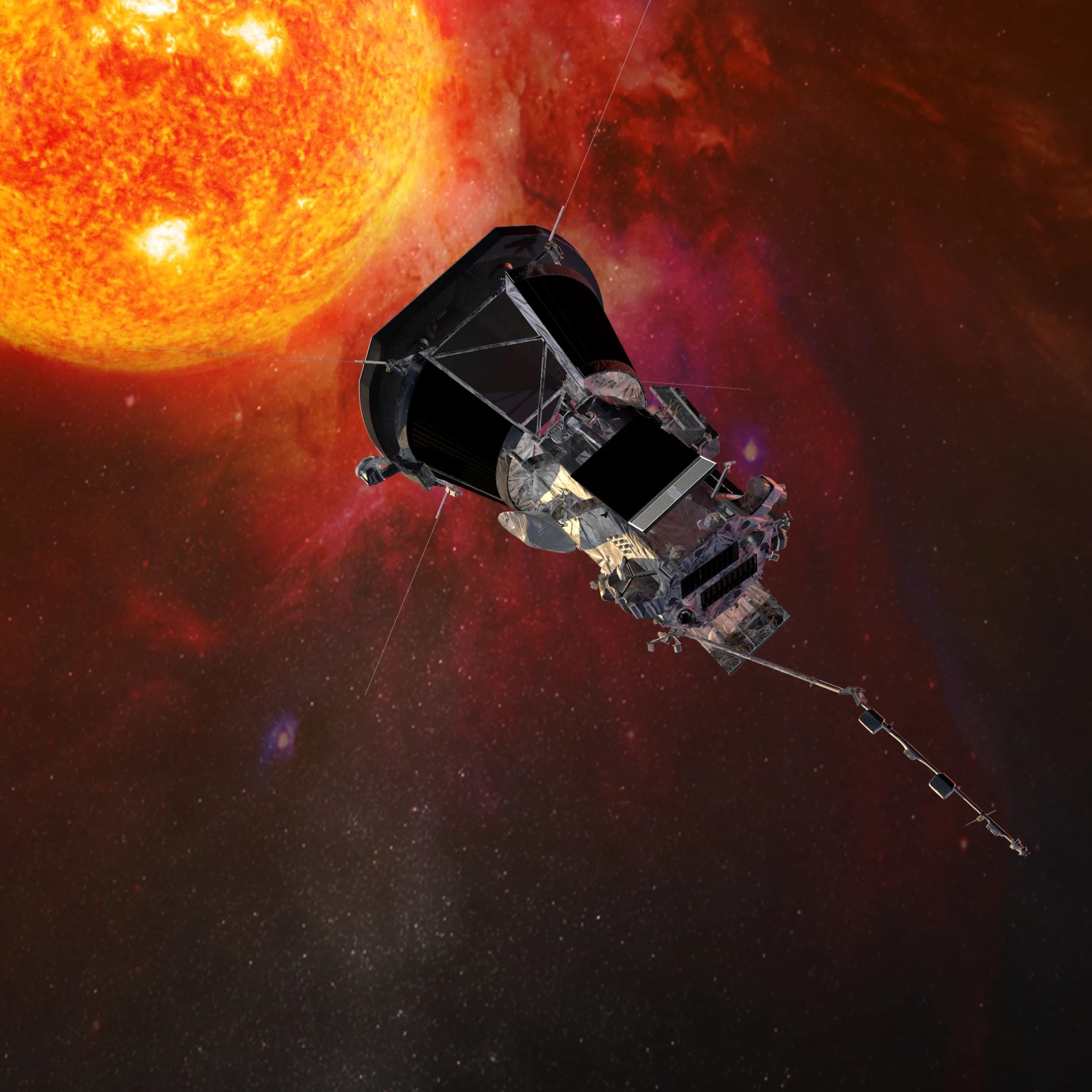
On a mission to “touch the Sun,” NASA’s Parker Solar Probe became the first spacecraft to fly through the corona…\
\
 Juno \
\
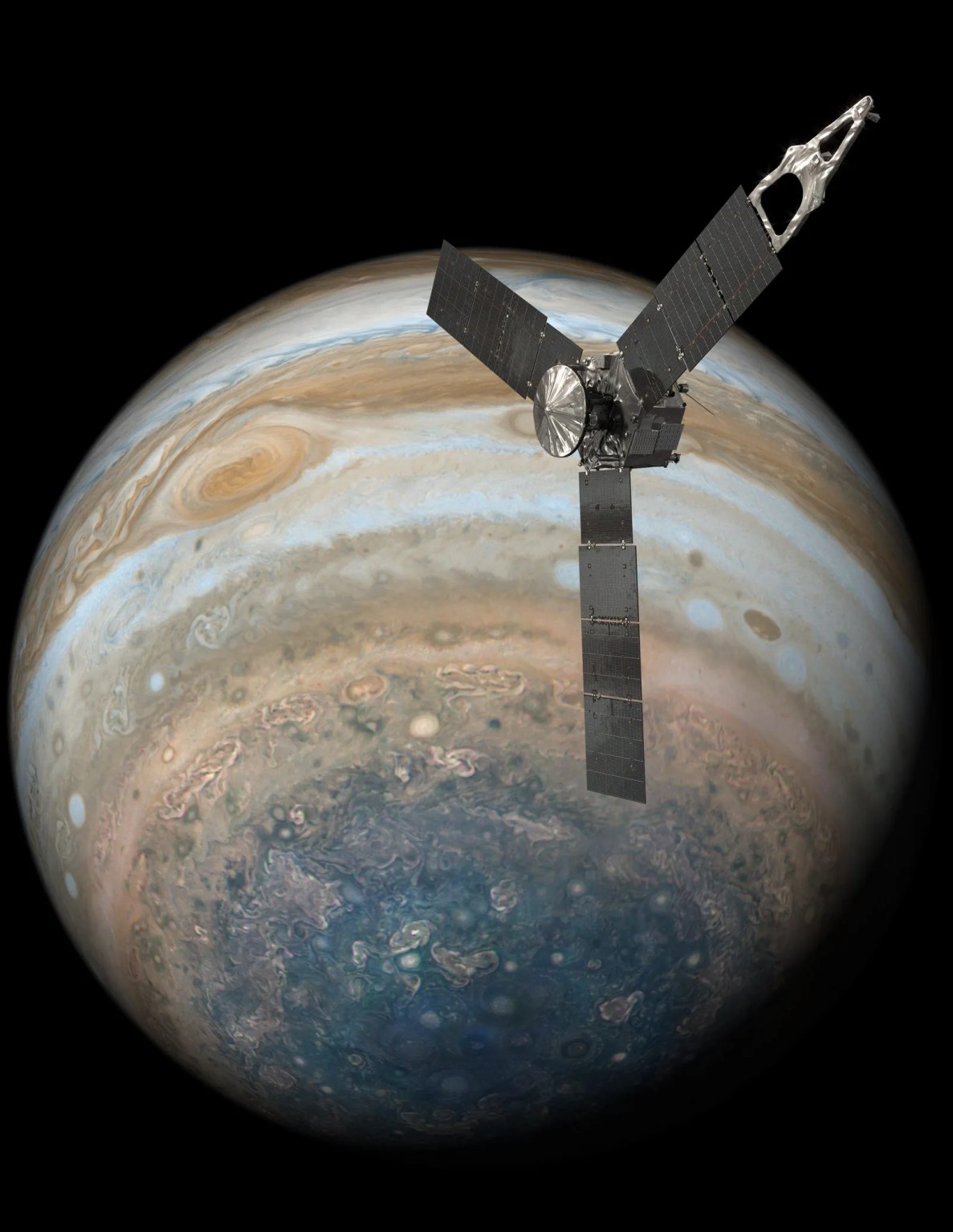
NASA’s Juno spacecraft entered orbit around Jupiter in 2016, the first explorer to peer below the planet’s dense clouds to…\
\
Δ
Did you find what you were looking for?(Required)
Yes
No
Partly
What were you looking for?(Required)
0 of 1000 max characters
What were you hoping to accomplish by visiting our website?(Required)
0 of 3000 max characters
×
Notifications